Systems Thinking in Action: How System Dynamics Elevates Business Strategy and Problem Solving
- jeff wilson
- Aug 26, 2025
- 4 min read

Bottom Line Up Front (BLUF)
Systems thinking and system dynamics modeling offer business leaders a robust set of tools for tackling complex challenges, developing resilient strategies, and improving operational performance. By revealing the underlying interconnections and feedback loops within organizations, these approaches help avoid unintended consequences, root out persistent problems, and guide evidence-based decision-making. From manufacturing to healthcare, companies using system dynamics see measurable improvements in efficiency, agility, and long-term value.
Understanding the Issue: Complexity and Blind Spots in Business
The Challenge of Linear Thinking
Traditional business approaches often dissect challenges into isolated segments, treating symptoms rather than underlying causes. This mindset risks missing the big picture, where decisions in one area ripple across departments, marketplaces, or even entire industries. The result? Unintended consequences, chronic issues, and missed opportunities for improvement.
Why Complexity Demands a Systems Approach
Organizations today operate in a fast-paced, interconnected environment. Market trends, supply chain disruptions, shifting customer preferences, and regulatory changes coalesce into intricate webs of cause and effect. Managing such complexity requires more than spreadsheets or isolated KPIs; it demands a holistic lens that sees how everything fits together—enter systems thinking.

Resolution: Systems Thinking and System Dynamics to the Rescue
What Is Systems Thinking?
Systems thinking is a discipline that encourages leaders to view organizations as dynamic collections of interrelated components. Rather than focusing narrowly on isolated events, systems thinking digs into patterns, structures, and feedback processes—the underlying “why” behind business outcomes.
At its core, this approach highlights:
Feedback loops (positive and negative)
Time delays between action and effect
Nonlinear relationships among business units and external forces
What Is System Dynamics?
System dynamics is a methodology that puts systems thinking into action. It uses models (like causal loop diagrams and stock-and-flow diagrams) to map, visualize, and simulate the complex interactions underpinning organizational and market behavior. By modeling real-world scenarios, leaders can anticipate outcomes before making costly moves in the real world.
Key Benefits
Scenarios and forecasting for strategic decision-making
Simulation of potential outcomes before implementing changes
Evidence-based basis for choosing between multiple competing strategies
Learn more about modern business approaches in our Leadership Insights section.
Implementation: Applying System Dynamics to Strategy & Problem Solving
Strategic Planning the Systematic Way
With system dynamics, strategic planning breaks away from guesswork and gut feelings. Here’s how companies integrate system dynamics into their strategy development:
Baseline Modeling: Map current business processes—including production, logistics, sales, and customer service—highlighting interdependencies.
Scenario Analysis: Simulate multiple “what-if” trajectories by adjusting key parameters (e.g., expanding into a new market, varying marketing spend, or altering supply chain partners).
Risk Assessment: Use models to foresee bottlenecks, resource shortages, or unintended side-effects of change before they happen.
Alignment Across Functions: Unify diverse teams around a shared understanding of system goals and feedback, reducing conflicting priorities.
Real-World Example
A global retailer, preparing for a major product launch, used system dynamics to simulate inventory levels, supply chain constraints, and marketing effectiveness across regions. This helped the business avoid stockouts, reduce unnecessary warehousing costs, and keep marketing aligned with inventory realities.
Systems Thinking for Problem-Solving
Instead of treating bottlenecks or failures as isolated incidents, systems thinking digs deeper to expose the underlying structures:
Root Cause Analysis: Go beyond symptoms by mapping the causal web using causal loop diagrams. Example: A persistent drop in customer satisfaction may result from delayed delivery, traced back to supplier variability, traced further to procurement policy gaps.
Improvement Interventions: Test various “leverage points” in the system—small changes that can have outsized impact.

Case Study
A healthcare provider, overwhelmed by patient delays, mapped its patient flow as a system. By visualizing bottlenecks in admissions and resource allocation, the organization restructured its queueing process and better matched staffing to demand, dramatically reducing patient waiting times.
Explore related approaches for teams in our Team Productivity Insights.
The Building Blocks: Tools and Techniques
Causal Loop Diagrams
Visual maps that capture feedback flows and interdependencies.
Help teams see circular chains of cause/effect that linear lists might miss.
Stock-and-Flow Diagrams
Quantify supplies, backlogs, or resources moving through a system.
Reveal accumulation effects and time delays critical to forecasting.
Scenario Simulation
Play out alternative futures by tweaking variables in the model.
Expose hidden risks and fragilities invisible to gut-based planning.
Industry Impact: Success Stories in Application
Manufacturing
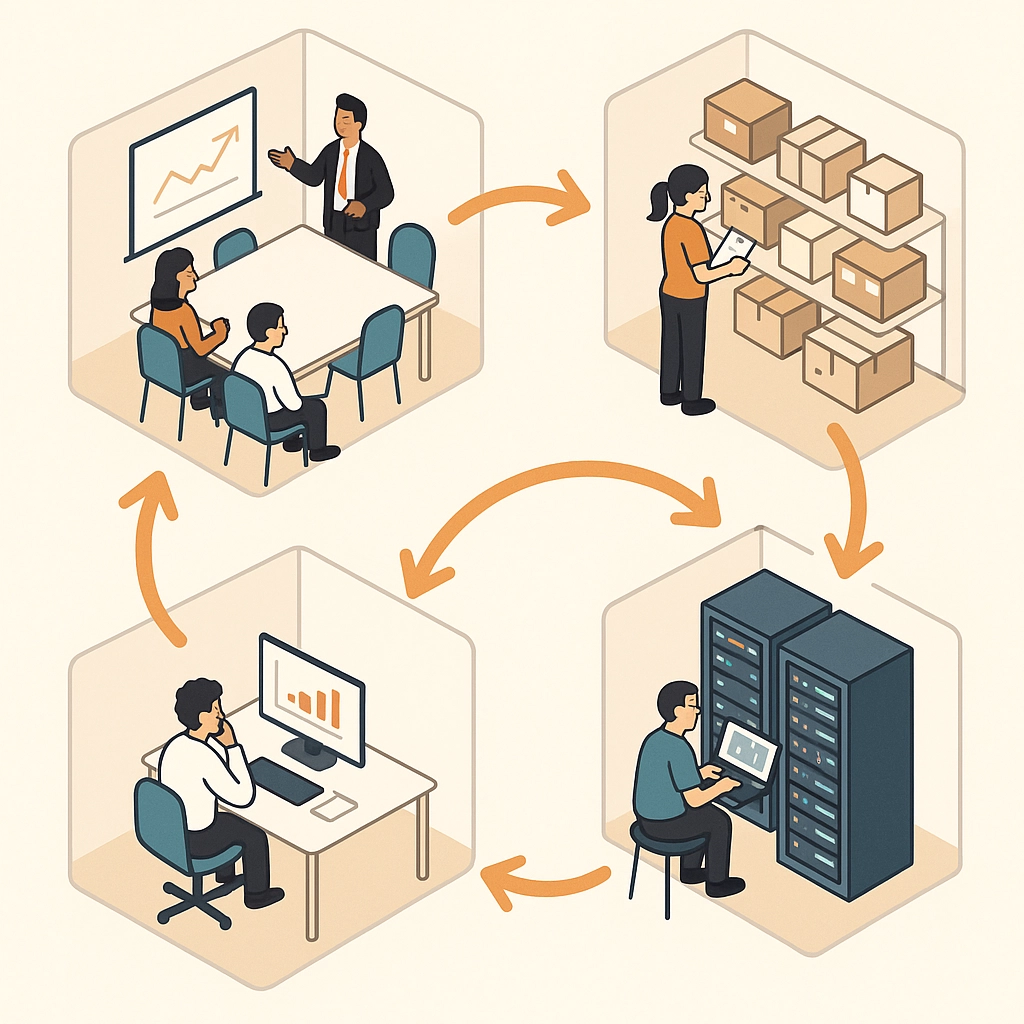
System dynamics helps optimize production schedules, cut waste, and stabilize supply chains. For example, an automaker used dynamic models to pinpoint inefficiencies in parts ordering and streamline assembly lines, improving both output and inventory turnover rates.
Retail
Retailers employ system dynamics to forecast demand spikes, fine-tune promotions, and avoid costly overstock or missed sales due to supply chain hiccups.
Healthcare
Hospitals and care providers model patient inflow, resource allocation, and emergency surges. In one case, simulations enabled a facility to balance doctor availability with admitted patients, improving both patient outcomes and operational efficiency.
For further reading, see insights on operational excellence.
Performance Management: Moving Beyond Silos
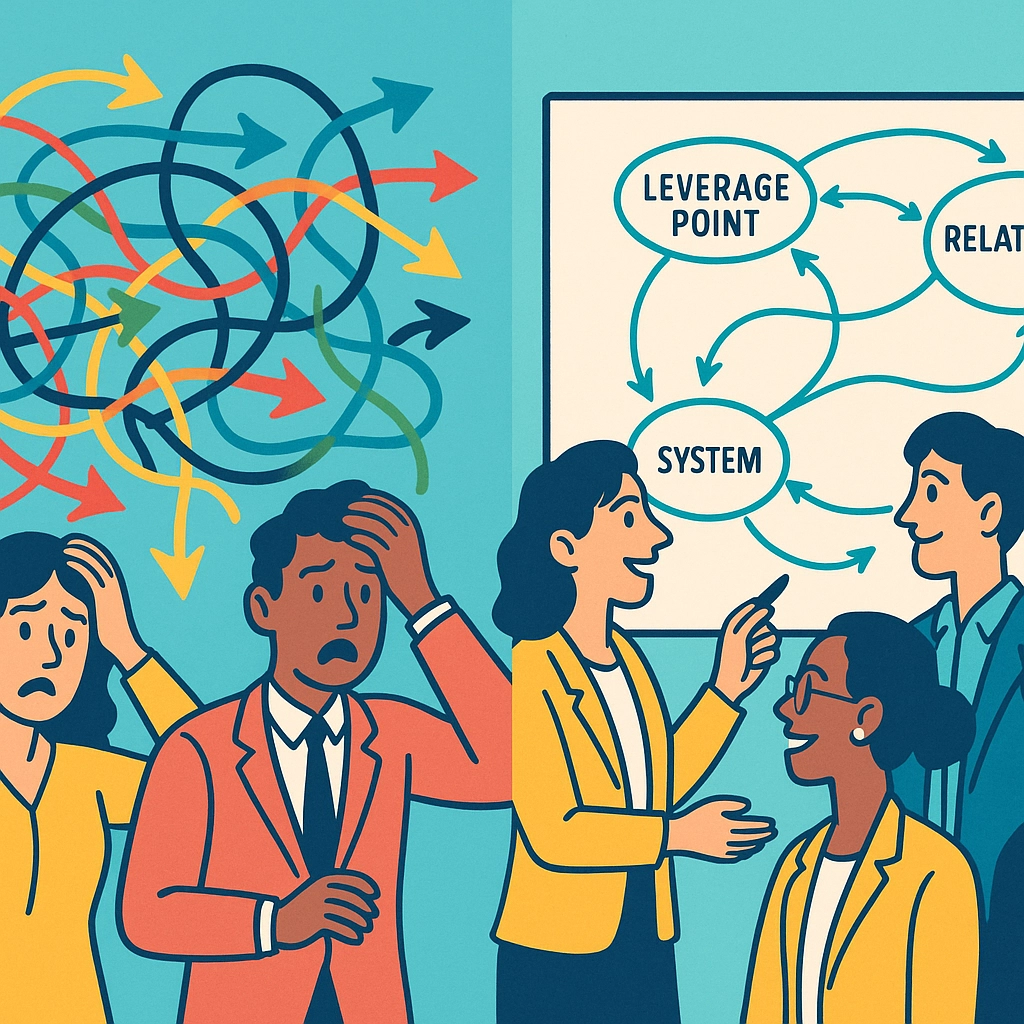
Traditional dashboards often incentivize departments to optimize for their own KPIs—sometimes at the expense of the overall company. Systems thinking looks at the big picture. By linking strategic, operational, and financial metrics in a single model, leaders can:
Balance competing objectives (cost vs. quality vs. speed)
Predict long-term effects of short-term decisions
Build organizational resilience against volatility
Bringing It All Together: Steps to Start Implementing Systems Thinking
Build Awareness: Train teams (from leadership to frontline) on the basics of feedback loops, dynamic modeling, and holistic mapping.
Choose Tools: Start with simple causal loop diagrams before advancing to robust simulation software.
Collaborative Modeling: Involve stakeholders from different divisions for richer, more accurate maps of business systems.
Pilot Projects: Apply system dynamics to one pressing challenge. Use outcomes to build support for wider adoption.
The Bottom Line
Incorporating systems thinking and system dynamics into your organization’s strategy and problem-solving arsenal leads to more informed, resilient, and agile decision-making. This approach is not just a theory—it’s a proven way to unlock hidden opportunities, sidestep pitfalls, and chart a course through complex, unpredictable business environments.
For more resources or to discuss system dynamics in your own context, check out our insights hub or connect with a business strategy expert.

Comments