Using Feedback Effectively to Build Trustful Small Teams
- jeff wilson
- Jul 31, 2025
- 6 min read

Updated: Aug 20, 2025
The Trust Equation in Small Teams
In today's fast-paced business environment, small teams have become the backbone of agile organizations. Whether you're managing a startup crew or leading a specialized department within a larger company, the success of these compact units hinges on one critical factor: trust.
Trust isn't just a warm fuzzy feeling—it's the operational currency that allows small teams to move quickly, take risks, and produce their best work. When team members trust each other, they spend less time on defensive communication and more time on productive collaboration. But here's the challenge: trust doesn't materialize overnight, nor does it sustain itself without ongoing maintenance.
This is where feedback loops enter the picture.
What Are Feedback Loops (And Why They Matter)
At their core, feedback loops are structured systems that allow information to flow between team members, creating opportunities for continuous improvement. Unlike one-off performance reviews or casual comments, effective feedback loops are intentional, regular, and designed to create meaningful dialogue.
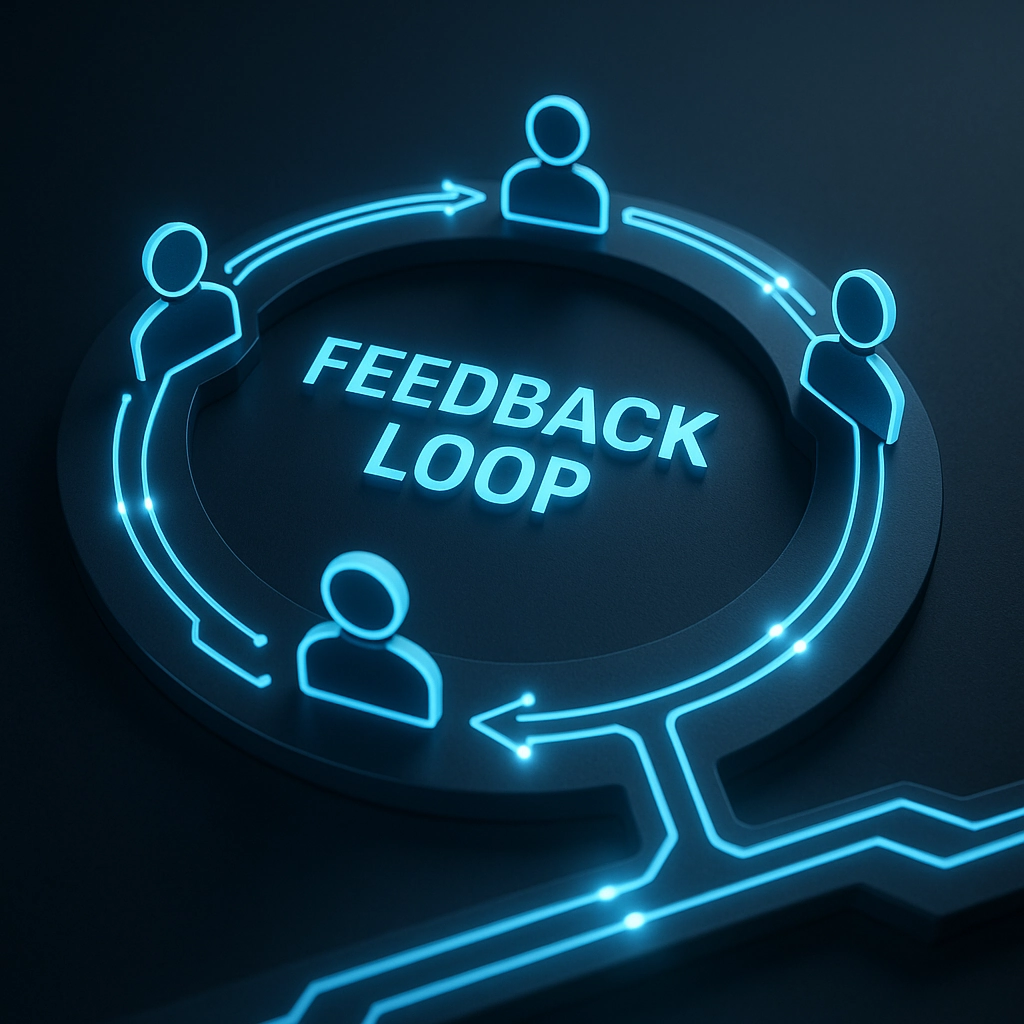
In small teams, feedback loops serve multiple functions:
- Course correction: They help identify issues before they become critical problems
- Validation: They confirm when team members are on the right track
- Alignment: They ensure everyone understands expectations and priorities
- Growth: They provide insights that help individuals and the team evolve
Most importantly, when implemented thoughtfully, feedback loops build the foundation for lasting trust.
The Trust-Feedback Connection
Think of trust as a bank account. Every positive interaction makes a deposit, while misunderstandings and unmet expectations make withdrawals. Feedback loops, when executed well, ensure that your team's trust account maintains a healthy positive balance.
Here's how this works in practice:
1. Transparency Breeds Predictability
When feedback flows regularly, team members understand where they stand. This predictability eliminates the anxiety that comes from uncertainty ("Am I doing well?" "Is my manager happy with my work?").
Regular check-ins create an environment where nobody is left guessing about their performance or standing within the team. This transparency makes the workplace psychologically safer—a critical ingredient for trust.
2. Vulnerability Creates Connection
Effective feedback requires both giving and receiving parties to show vulnerability. When a team leader openly asks for feedback on their own performance, they model vulnerability. When team members share their challenges or admit mistakes during feedback sessions, they're demonstrating trust.
These moments of vulnerability create deeper connections between team members. As researcher Brené Brown has noted, vulnerability isn't weakness—it's the birthplace of innovation, creativity, and change.
3. Consistency Builds Reliability
Sporadic feedback creates anxiety. ("Why am I suddenly being called in for a meeting?") By contrast, consistent feedback loops establish reliability. When team members know that constructive conversations happen every week or month—not just when something goes wrong—they develop confidence in the process.
This reliability extends to how team members view each other. Regular feedback helps everyone understand their colleagues' working styles, strengths, and growth areas, making collaboration more effective.
Types of Feedback Loops for Small Teams
Small teams benefit from several types of feedback loops, each serving different purposes:
1. One-on-One Feedback Sessions
These private conversations between a team leader and individual members provide space for personalized coaching and addressing sensitive issues. They build trust through focused attention and customized support.
Best practice: Schedule these consistently (weekly or bi-weekly) rather than only when problems arise. Use a simple framework like "Start, Stop, Continue" to structure the conversation.
2. Team Retrospectives
Regular team-wide discussions about what's working, what isn't, and what could be improved create a shared sense of ownership and accountability. These sessions normalize constructive criticism and collaborative problem-solving.

Best practice: Hold retrospectives at regular intervals (often at project milestones or monthly) and ensure everyone contributes. Document action items and review progress at the next session.
3. Peer Feedback Mechanisms
Enabling team members to provide feedback to each other removes the manager as the sole source of input and creates a more dynamic learning environment. Peer feedback helps team members appreciate each other's unique contributions and perspectives.
Best practice: Create structured opportunities for peer feedback rather than leaving it to chance. Consider techniques like "appreciation circles" or "skill-sharing workshops" where team members can acknowledge each other's strengths.
4. Real-Time Feedback Channels
For small teams working on fast-moving projects, waiting for scheduled sessions may not be sufficient. Creating channels for immediate feedback (like dedicated Slack channels or quick stand-up meetings) ensures issues are addressed promptly.
Best practice: Establish clear guidelines for real-time feedback to ensure it remains constructive and actionable rather than reactive.
Implementing Effective Feedback Loops
Creating feedback loops that build trust rather than erode it requires thoughtful implementation:
Start with Psychological Safety
Before implementing any feedback system, ensure your team feels psychologically safe. Team members need to believe they won't be punished or embarrassed for speaking up with ideas, questions, concerns, or mistakes.
Have you ever tried to implement feedback sessions, only to be met with silence when you ask for input? This is why psychological safety is essential. Without it, feedback sessions become an unproductive waste of time—because real, honest input won't be shared.
Practical steps include:
- Acknowledging your own mistakes as a leader
- Responding positively when team members take risks
- Demonstrating curiosity rather than judgment when issues arise
- Explicitly stating that feedback is meant to help everyone improve, not to assign blame
Be Specific and Actionable
Vague feedback ("You need to be more proactive") creates anxiety without providing direction. Trust-building feedback is specific ("I noticed you waited for explicit instructions on the last three tasks") and actionable ("Next time, consider drafting a plan and checking with me before proceeding").
Balance Positive and Constructive Feedback
Feedback loops that only focus on areas for improvement will quickly drain your team's trust account. Effective feedback systems actively look for and acknowledge successes, strengths, and progress—not just problems.
A good rule of thumb: aim for at least a 3:1 ratio of positive to constructive feedback.
Close the Loop
True feedback loops aren't one-way streets—they create a complete circuit. After giving feedback, check for understanding, invite questions, and establish clear next steps. After receiving feedback, demonstrate that you've heard it by taking visible action.

Overcoming Common Challenges
Even with the best intentions, feedback loops can encounter roadblocks:
Challenge: Feedback Feels Too Personal
Solution: Frame feedback around behaviors and impacts rather than character traits. "When you miss deadlines, it causes the team to rush" is more effective than "You're unreliable."
Challenge: Team Members Don't Participate
Solution: Start small with low-stakes feedback exercises. Ask simple questions like "What's one thing we could improve in our meetings?" before tackling more complex issues.
Challenge: Feedback Sessions Become Venting Sessions
Solution: Establish a structure that includes acknowledging challenges but focuses primarily on solutions. The "What? So what? Now what?" framework can help keep discussions productive. Whenever challenges or complaints are raised, it's an opportunity for you to allow the team to brainstorm solutions which are within their control.
It's not uncommon for teams to blame another team, but challenge your team for what they could to to help the other team meet expectations.
Challenge: Cultural Differences in Feedback Styles
Solution: Acknowledge that feedback preferences vary across cultures and individuals. Some team members may prefer direct feedback while others respond better to a more nuanced approach. Have explicit conversations about these preferences.
Measuring the Impact of Your Feedback Loops
How do you know if your feedback loops are successfully building trust? Look for these indicators:
- Increased voluntary sharing: Team members proactively offer ideas and information
- Healthy conflict: Discussions include respectful disagreement rather than artificial harmony
- Decreased defensiveness: Team members receive feedback with curiosity rather than justification
- Cross-functional collaboration: People seek opportunities to work with teammates outside their immediate role
- Recovery resilience: When trust is broken, the team bounces back quickly
Trust Through Feedback: A Continuous Journey
Building trustful teams through feedback isn't a one-time initiative—it's an ongoing practice. The most effective small teams revisit and refine their feedback mechanisms regularly, adapting them as the team evolves.
Remember that feedback loops aren't just procedural—they're deeply human. Behind every piece of feedback is a person hoping to be heard, understood, and valued. When feedback loops honor this human element, they transform from mere communication channels into powerful trust-building tools.
For small teams looking to thrive in complex, fast-changing environments, investing in thoughtful feedback loops isn't optional—it's essential. The trust they generate becomes the foundation that enables everything else: creativity, resilience, engagement, and ultimately, exceptional performance.
The question isn't whether your small team can afford to implement robust feedback loops. It's whether you can afford not to.


Comments